
TLDR: The Top 10 Must-Visit Kayaking Destinations Around the World cover very different kinds of paddling. Abel Tasman is a strong starting point for a guided coastal trip, while the Soča River demands moving-water skills and Glacier Bay requires remote cold-water preparation. Choose by route difficulty, weather exposure, access and your ability to recover after a capsize—not scenery alone.
This list preserves ten standout destinations while making the comparisons more useful. Some are suitable for a guided day on relatively protected water; others involve surf, tides, river hazards, powerful weather or difficult logistics. Even within one destination, the character of a trip can change sharply with the route and season.
How to compare these kayaking destinations
Start by identifying the type of paddling you actually want. Coastal touring usually involves wind, tides, boat traffic and landing decisions. Lake paddling removes tides but can still produce rough water far from shore. Whitewater adds current, rapids and technical rescue requirements. Remote expeditions combine several of those concerns with limited outside assistance.
A guided trip is the sensible default when you lack experience with the local hazards, cannot interpret marine or river conditions, or would need to rent unfamiliar equipment. A guide does not make difficult water harmless, but local route knowledge and an organized rescue plan can turn an unrealistic independent itinerary into an appropriate outing.
| Destination | Paddling character | Best fit |
|---|---|---|
| Ha Long Bay–Cát Bà, Vietnam | Coastal karst scenery | Guided sightseeing and short tours |
| Milford Sound, New Zealand | Weather-exposed marine paddling | Guided scenic outings |
| Gulf of California, Mexico | Island and desert-coast touring | Day trips or supported journeys |
| Abel Tasman, New Zealand | Beach-linked sea kayaking | Guided beginners and experienced tourers |
| Lake Powell, United States | Desert reservoir and canyon touring | Day paddles and planned overnights |
| Soča River, Slovenia | Cold moving water and whitewater | Trained river paddlers |
| Glacier Bay, United States | Remote cold-water expedition paddling | Experienced, prepared groups |
| Dalmatian Coast, Croatia | Island and coastal touring | Route-specific day or multi-day trips |
| Great Barrier Reef, Australia | Tropical marine paddling | Guided trips in selected areas |
| Lake Baikal, Russia | Vast, remote freshwater shoreline | Experienced paddlers after access checks |
Top 10 must-visit kayaking destinations around the world
1. Ha Long Bay–Cát Bà Archipelago, Vietnam
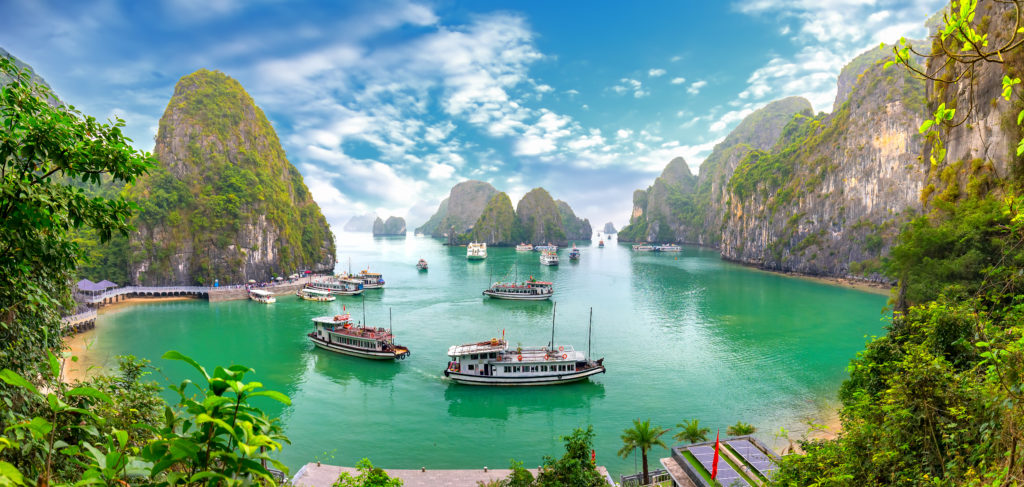
Ha Long Bay–Cát Bà Archipelago is the formal name of the UNESCO World Heritage property, where steep limestone formations create the list’s most recognizable karst seascape. Sheltered-looking passages and enclosed views give it obvious appeal for a sightseeing paddle, but appearances do not establish that every channel is beginner-friendly or open to kayaks.
Best for: A guided excursion centered on scenery rather than mileage. Before booking, confirm the launch point, permitted route, cave or lagoon access, group size and cancellation policy. Weather and local controls may change what an operator can offer, so treat access to any particular feature as a possibility rather than a promise.
2. Milford Sound / Piopiotahi, New Zealand
Milford Sound earns its place through sheer visual drama: steep mountains, waterfalls and a narrow marine setting that makes a kayak feel appropriately small. That same setting should not be mistaken for an ordinary calm-water lake. Wind, precipitation, cold water and changing marine conditions can shape the day.
Best for: A guided scenic paddle, especially for travelers without local coastal experience. Ask the operator how much paddling the itinerary includes, what clothing is supplied and what happens when conditions rule out the intended route. A shorter trip that can adapt to the forecast is often more enjoyable than forcing an ambitious distance.
3. Gulf of California (Sea of Cortez), Mexico
The Gulf of California combines desert shoreline, islands and marine paddling, but it is far too large to treat as one uniform route. A short outing near a developed launch and a multi-day island journey have little in common beyond salt water and a memorable horizon.
Best for: Paddlers who choose a specific region and itinerary rather than booking against the destination name alone. Wildlife encounters may occur, but they are never guaranteed and should not be pursued at the expense of animals’ space. The Blisss guide to responsible wildlife kayaking offers a useful framework for observing without crowding or chasing.
4. Abel Tasman National Park, New Zealand
Golden beaches and a coastline that supports both walking and paddling make Abel Tasman one of the list’s more approachable choices—but only on an appropriate section and in suitable conditions. New Zealand’s Department of Conservation says people renting kayaks independently need previous sea-kayaking experience. It also advises against kayaking north of Onetahuti Bay because that coast is remote and exposed.
Best for: A first guided sea-kayaking trip or a carefully planned independent outing for paddlers with the required experience. Use the official Abel Tasman planning information to check current access and expectations. If you want to combine hiking and paddling, plan baggage, campsites, pickup points and weather contingencies as one itinerary rather than two disconnected activities.
5. Lake Powell, United States
Lake Powell offers red-rock reservoir paddling within Glen Canyon National Recreation Area. Narrow canyon arms can provide a more intimate trip than crossing broad stretches of open water, but route feasibility depends on current water level and launch access. The National Park Service warns that boat traffic and poor weather can make the water choppy. It also reported on September 15, 2026, that water levels continue to fluctuate.
Best for: A planned canyon day trip or overnight route with a confirmed launch. Check the National Park Service kayaking guidance, current access notices and the distance between usable landings before leaving. Carry more drinking water than the pleasant reservoir setting may tempt you to pack, and avoid relying on an old map or trip report for present-day shoreline access.
6. Soča River, Slovenia
The Soča represents a different category from the coastal and lake destinations on this list. It is cold, moving alpine water with sections that demand genuine whitewater judgment. Official navigation guidance requires a valid permit and use of marked entry and exit points, while warning that the steep-gradient river can be dangerous for inexperienced visitors.
Best for: Paddlers with skills appropriate to the selected river section, or visitors joining qualified local instruction. Consult the official Soča navigation information for permit periods, designated access and current rules. A competent flatwater paddler is not automatically a competent whitewater paddler; eddy turns, river reading, swimming in current and moving-water rescue are separate skills.
7. Glacier Bay, Alaska, United States
Glacier Bay is the expedition entry: cold water, large tides, wildlife considerations, remote camps and limited margins for casual mistakes. It rewards preparation with a scale and sense of wilderness that a busy day-paddle venue cannot reproduce. It should be planned as a remote backcountry journey rather than sightseeing with a tent attached.
For overnight backcountry use from May 1 through September 30, paddlers must register, complete an orientation and obtain a free permit. The National Park Service also highlights extreme tides and wildlife-related restrictions. Best for: Experienced sea kayakers with cold-water equipment, sound self-rescue ability and a conservative itinerary—or paddlers using an appropriately supported trip. Start with the official Glacier Bay kayaking guidance, then build tidal timing, food protection, landings and emergency communication into the route.
8. Dalmatian Coast, Croatia
The Dalmatian Coast offers Adriatic island and shoreline paddling, with the potential to link coves, villages and overnight stops. Its weakness as a planning label is its size: saying “Dalmatian Coast” does not identify the exposure, crossing distance, landing options or local traffic around a particular island.
Best for: Travelers willing to choose a defined island group, launch and daily distance. Match the itinerary to wind exposure and open-water crossings, not simply the number of days available. A guided day trip can suit a casual paddler, while an independent island journey calls for navigation, capsize recovery and the discipline to change plans when the forecast deteriorates.
9. Great Barrier Reef, Australia
The Great Barrier Reef is a vast marine ecosystem rather than a single kayaking trail. UNESCO describes it as the world’s most extensive coral reef ecosystem, recording more than 1,500 fish species and roughly 400 coral species. Those numbers explain the attraction, but they do not tell you where kayaking is allowed or sensible.
Best for: A guided paddle in a specifically selected area where launch access, marine-park zoning and forecast conditions have been confirmed. Do not assume every reef experience involves clear, calm, shallow water or close wildlife. Keep boats, paddles and feet away from coral, follow local zoning instructions and choose operators that explain wildlife distances and low-impact practices.
10. Lake Baikal, Russia
Lake Baikal remains on the list for its extraordinary natural history and rugged freshwater scale. UNESCO describes it as approximately 25 million years old and as much as 1,700 meters deep. A lake of that size should be approached like a serious open-water environment, not an oversized recreational pond.
Best for: Experienced paddlers only after checking current government travel advisories, entry requirements, transportation, local permissions and seasonal access. Practical arrangements and route conditions can change, so this is a destination to research from the ground up before committing money. Its inclusion here is inspiration, not a recommendation to travel without current official guidance.
A pre-booking checklist for any international kayak trip
Once a destination catches your attention, investigate the exact route. “Beginner-friendly” is meaningless without knowing the distance from shore, likely wind, water temperature, current, landing options and rescue support. Review the main kayaking safety essentials before deciding whether your skills match the plan.
- Identify the water type: sheltered coast, exposed sea, lake, reservoir or whitewater river.
- Check the responsible local authority for permits, closures, launch access, camping rules and protected zones.
- Use a route-specific marine forecast, tide table, river-flow report or park conditions page as appropriate.
- Wear a properly fitted personal flotation device and dress for the water temperature, not just the air.
- Confirm that your group can perform the relevant capsize recovery or river rescue.
- Leave a float plan with a reliable person, including the route, group, boats and overdue time.
- Ask rental companies what safety equipment, communications gear and instruction are included.
- Book a guide when local hazards or technical demands exceed your experience.
- Keep distance from wildlife and avoid landing on sensitive shorelines or damaging reefs.
- Build spare time into multi-day plans so deteriorating conditions do not pressure the group into launching.
Trip duration also deserves an honest calculation. Paddling speed is only one component; breaks, crossings, tidal timing, portages, scouting, landings and camp setup all consume daylight. Use a conservative schedule, especially when adapting the broader process for calculating an outdoor trip’s total length.
Choose the water, not just the postcard
For an accessible introduction to international sea kayaking, a guided Abel Tasman itinerary is one of the clearest starting points on this list. Ha Long Bay, Milford Sound and selected Great Barrier Reef or Dalmatian routes can also work as guided day experiences when local conditions cooperate. Lake Powell rewards current access research, while the Soča, Glacier Bay and Lake Baikal demand increasingly specialized preparation.
The right next step is to shortlist two destinations, select a specific route in each and compare the actual hazards, required skills, guide support and travel logistics. The best kayaking destination is the one whose water you are prepared to paddle—not simply the one with the most dramatic photograph.
References
- Ha Long Bay – Cat Ba Archipelago – Documents – UNESCO World Heritage Centre
- Abel Tasman Coast Track: Abel Tasman National Park, Nelson/Tasman region
- Kayaking – Glen Canyon National Recreation Area (U.S. National Park Service)
- Lake Powell Access: What Visitors Need to Know Through 2026 – Glen Canyon National Recreation Area (U.S. National Park Service)
- Soča plovba – English
- Kayaking – Glacier Bay National Park & Preserve (U.S. National Park Service)
- www.nps.gov
- Great Barrier Reef – UNESCO World Heritage Centre
- Lake Baikal – UNESCO World Heritage Centre