
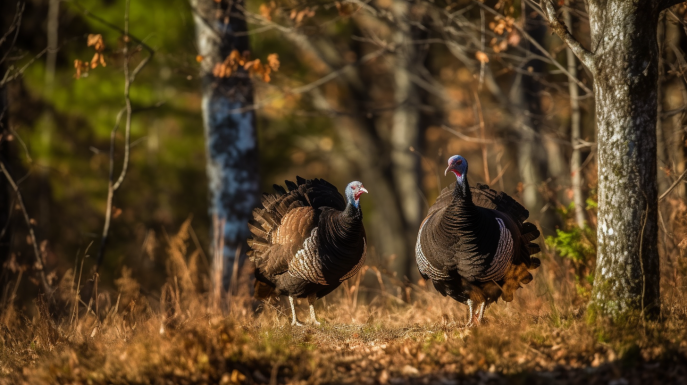
In short: Insights from Outdoors Enthusiast Larry Dablemont centers on a consequential question for Missouri hunters and landowners: how should the state balance turkey-hunting opportunity with the long-term health of wild-turkey populations? Dablemont favors more conservative seasons and stronger enforcement. His perspective contributes to the debate, but local observations and policy preferences should be considered alongside regional monitoring, habitat conditions, and research into turkey reproduction.
The most useful way to read Insights from Outdoors Enthusiast Larry Dablemont is as an experienced outdoorsman’s argument for precaution. His concerns include hunting pressure, the placement of the youth season, harvest limits, poaching, and whether current management responds quickly enough to changes hunters see in the field. Those questions deserve attention without treating any proposed rule change as a guaranteed solution.
Who is Larry Dablemont?
Dablemont is closely associated with outdoor writing and the Missouri Ozarks. His official biography describes him as an outdoor publisher, columnist, author, speaker, naturalist, and outdoorsman. It also says he earned a wildlife-management degree from the University of Missouri and previously worked in outdoor-writing and naturalist roles.
That background helps explain the perspective behind his turkey commentary. He approaches the subject through years of watching wildlife, hunting, writing about the Ozarks, and questioning management decisions. Field observations can identify changes worth investigating, especially when multiple landowners and hunters notice similar patterns. They do not, by themselves, establish the cause or scale of a statewide population trend.
What Dablemont argues about Missouri turkey stewardship
Dablemont’s central concern is that some places no longer hold the number of gobblers hunters remember from previous years. The original commentary attributes several proposals to him: begin the regular spring season later, reduce fall hunting, tighten harvest limits, and move the youth season to the end of the regular spring season.
These proposals share a common principle: when the status of a local turkey population is uncertain, reduce harvest pressure rather than assume the population can absorb it. Dablemont also argues that wildlife agencies should take field reports seriously and respond more directly to illegal harvest.
His criticism of the youth season requires careful distinction. A supervised youth hunt can introduce a young person to safe and ethical hunting. Dablemont’s objection is aimed at adults who may misuse that opportunity or violate hunting rules, not at youth participation itself. The available material does not establish how frequently such misuse occurs or whether it is unusually common during youth season, so it is best understood as an enforcement concern rather than a measured statewide trend.
Turkey numbers depend on more than hunting pressure
Harvest is one part of turkey management, but abundance can also change with adult survival, nesting success, poult survival, weather, predators, and habitat. Missouri guidance identifies all of these as relevant influences. This makes simple explanations tempting but unreliable: fewer gobblers in one hunting area do not automatically reveal whether harvest, poor reproduction, habitat change, severe weather, predation, or several factors together are responsible.
Reproduction is especially important. A turkey population needs hens to nest successfully and enough poults to survive into older age classes. Missouri habitat guidance emphasizes the availability of nesting and brood-rearing cover, while the state’s long-term turkey story includes concern about reduced poult production. Cutting harvest may protect some adult birds, but it does not create the vegetation structure, insects, escape cover, or seasonal habitat young turkeys need.
Regional variation matters too. Missouri’s 2024 turkey status report does not describe one identical pattern across every part of the state. Its Ozarks East discussion, for example, notes lower harvest during some earlier periods followed by good harvest years in 2023 and 2024. A hunter can therefore experience a genuine local decline while another region has a different recent pattern.
Habitat is the practical lever available to landowners
Restricting hunting on private property can lower harvest pressure on that parcel, but it is not the same thing as managing habitat. A closed property with poor nesting cover may offer less reproductive value than a carefully managed property where limited hunting occurs.
The more useful landowner question is whether the property provides suitable habitat across the turkey’s life cycle. MU Extension’s wild-turkey habitat guidance explains how nesting, brood-rearing, feeding, roosting, and escape needs fit together. Depending on the land, practical work may include maintaining diverse native vegetation, retaining appropriate roost trees, creating usable edge structure, and managing openings so hens and poults can move through cover rather than cross large exposed areas.
Landowners should build a plan around the property’s current conditions rather than apply a generic checklist. A mature forest, overgrazed pasture, brushy field, and intensively mowed property present different limitations. The first step is to identify which seasonal need is missing, then choose management work that addresses that specific gap.
Season timing is a legitimate question, not a settled solution
Dablemont’s preference for a later spring opener reflects concern about disturbing breeding activity or removing gobblers too early. It is a reasonable management question, but research does not reduce it to a universal rule. A review of spring turkey season timing in the Southeast concluded that managers must balance hunting opportunity with possible population effects and that further research is needed to reduce uncertainty about effects on turkey demographics. Read the spring-season timing review from the Southeastern Association of Fish and Wildlife Agencies.
Changing an opening date also creates tradeoffs. A later season could alter harvest distribution and the stage of breeding at which hunting occurs. It could also affect participation and hunter success. Lower bag limits can reduce the maximum legal harvest per hunter, but their population-level effect depends on how many hunters fill multiple tags and which demographic problem managers are trying to solve.
The same logic applies to moving the youth season. Placing it after the regular season might address Dablemont’s concern about early pressure, but it could also change youth opportunity and hunting conditions. Managers need harvest records, survival estimates, brood data, compliance information, and regional comparisons to judge whether that change would deliver a meaningful conservation benefit.
What Missouri’s 2026 turkey rules allowed
Rules change, so hunters should verify them before every season rather than rely on a previous year’s article. For date context, Missouri’s 2026 youth spring turkey season ran April 11–12, followed by the regular season from April 20 through May 10.
Under the 2026 spring rules, resident hunters and qualifying nonresident landowners could take as many as two bearded turkeys, subject to timing restrictions. Nonresident spring hunters were limited to one bird. Those details describe the 2026 season only; they should not be assumed to apply unchanged in a future year.
Missouri also prohibited baiting, recorded calls, dogs, and live decoys during spring turkey hunting. These rules matter because stewardship is not limited to debating season dates. Following the legal methods, tagging and checking a harvested bird as required, and reporting suspected violations are immediate ways hunters can support fair management.
A practical stewardship checklist
Hunters and landowners do not have to resolve every statewide policy dispute before acting responsibly. The following steps support better decisions at the scale of an individual hunt or property:
- Check the current Missouri season dates, permit requirements, legal methods, shooting hours, and harvest limits before hunting.
- Learn to identify a legal bird under the current rules before entering the field.
- Do not use bait, recorded calls, dogs, or live decoys during the spring season.
- Record sightings consistently instead of relying only on memory. Note hens, gobblers, poults, dates, weather, and general habitat type without publicly exposing sensitive locations.
- Evaluate nesting and brood-rearing cover separately from hunting access. Closing land to hunters does not automatically correct a habitat limitation.
- Avoid mowing or disturbing likely nesting cover without first considering timing and wildlife use.
- Report suspected poaching through the appropriate official channel rather than confronting another person in the field.
- Compare local observations with regional population and harvest reports before drawing a statewide conclusion.
Where Dablemont’s perspective fits in the larger debate
Dablemont’s strongest contribution is his insistence that hunters think beyond the next opening morning. Questions about declining local sightings, reproduction, enforcement, and season structure belong in wildlife-management discussions. Longtime observers can help agencies identify places where statewide averages may obscure a local problem.
The next step is to connect those concerns to measurable evidence. If one region has fewer poults, managers need to investigate reproduction and habitat. If adult survival is the problem, harvest and other mortality sources deserve closer attention. If illegal take is suspected, enforcement data and documented reports are more useful than broad assumptions about an entire group of hunters.
That approach neither dismisses field experience nor treats it as the final word. It uses observation to frame better questions, monitoring to test them, and habitat or regulatory action to address the cause most strongly supported by the evidence.
The takeaway for Missouri turkey hunters
Larry Dablemont’s call for caution is a useful reminder that wildlife abundance cannot be taken for granted. His preferred changes—a later spring opener, reduced fall hunting, tighter limits, and a rescheduled youth season—should remain part of the policy conversation, but they are proposals rather than proven statewide remedies.
For hunters, the immediate priority is straightforward: follow the current rules, treat the youth season as an educational opportunity, report violations, and pay attention to local habitat as well as harvest. For landowners, assess whether the property supplies nesting and brood-rearing cover rather than assuming that restricted access alone protects turkey populations. Pairing those field-level choices with regional monitoring gives Missouri a stronger foundation for deciding what, if anything, should change next.
References
- Larry Dablemont | Author, Naturalist, Outdoorsman
- Wild Turkey Biology and Habitat Management in Missouri | MU Extension
- Quality Turkey Nesting and Brood-Rearing Habitat in Missouri
- 2024 Missouri Wild Turkey Harvest and Population Status Report
- Considerations for Timing of Spring Wild Turkey Hunting Seasons in the Southeastern United States
- Turkey: Regulations | Missouri Department of Conservation
- Turkey | Missouri Department of Conservation