
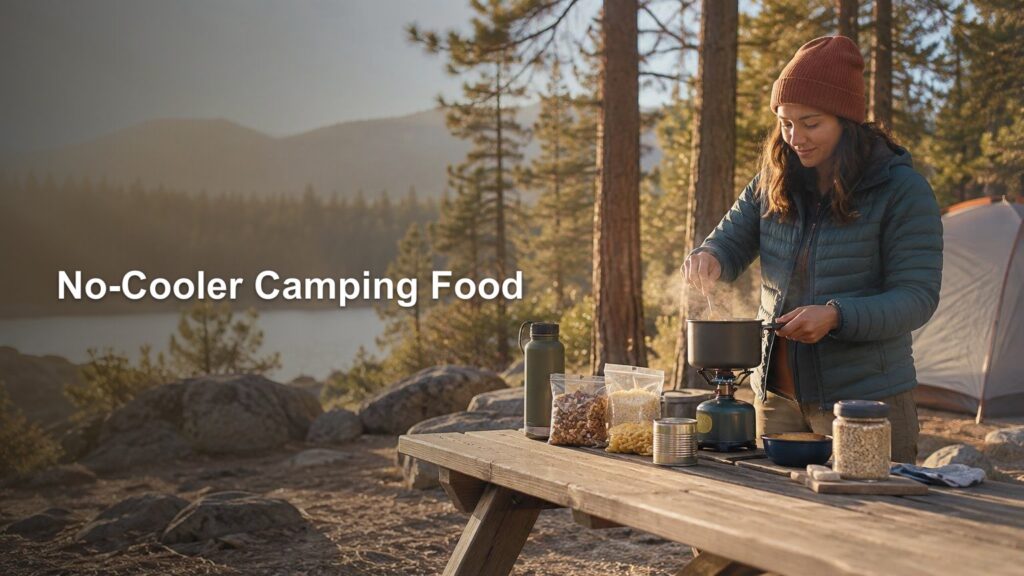
TLDR: Build each meal from a carbohydrate base, a shelf-stable protein, a fruit or vegetable component, and something that adds flavor or fat. Choose individual portions when an opened package would require refrigeration, and match the menu to your cooking equipment, available water, pack weight, and destination food-storage rules.
Good camping food without refrigeration does not have to mean three days of snack bars. Tortillas, oats, nut or seed butter, dried fruit, shelf-stable protein pouches, instant grains, noodles, soups, and dehydrated meals can become a simple weekend menu. The trick is to buy versions specifically labeled as shelf-stable, plan to finish packages after opening, and avoid bringing more cooking and cleanup work than the trip deserves.
Start with your camp setup. A no-cook menu offers maximum simplicity, while a stove expands your choices to oatmeal, soup, noodles, instant grains, and dehydrated meals. Car campers can tolerate cans, cartons, larger containers, and heavier fresh produce. Backpackers benefit more from lightweight, compact food with minimal packaging and predictable water requirements.
Choose camping food without refrigeration by cooking setup
Your available equipment should shape the menu before individual foods do. Otherwise, it is easy to arrive with instant rice and no practical way to boil water—or with a camp kitchen elaborate enough to qualify for its own campsite.
| Setup | Good meal formats | Main tradeoff |
|---|---|---|
| No cooking | Cereal, tortillas, crackers, nut or seed butter, ready-to-eat pouches, dried fruit | Fast and simple, but fewer comforting hot meals |
| Hot water only | Instant oats, couscous, soup cups, dehydrated meals, coffee or tea | Requires fuel and enough potable water |
| One pot | Noodles, instant grains, soup, beans, packaged meal mixes | More variety, but more washing and food residue |
| Car camping | Cans, cartons, durable produce, larger packages | Weight matters less, but leftovers still need attention |
| Backpacking | Dehydrated food, packets, tortillas, nuts, dried fruit | Weight and bulk improve, but specialty meals may cost more |
USDA specifically identifies foods such as peanut butter, canned meats, dried noodles and soups, jerky, dehydrated foods, dried fruit, nuts, and powdered drink or milk products as options for hiking and camping. Package instructions still control: a product may be shelf-stable while sealed but require refrigeration after it is opened.
Shelf-stable breakfast ideas
Breakfast works best when it is fast and uses little fuel. Think of it as a base plus two additions rather than a complicated recipe.
- Instant oats with dried fruit, seeds, and a nut- or seed-butter packet
- Cold cereal or granola with a single serving of shelf-stable milk, or powdered milk prepared according to its label
- Tortillas spread with nut or seed butter and topped with dried fruit
- Crackers, a ready-to-eat protein pouch, and durable whole fruit
- A snack-style breakfast of nuts, dried fruit, whole-grain crackers, and a hot drink
Single portions are especially useful here. If a shelf-stable milk carton, fruit cup, or spread must be refrigerated after opening, use a package you can finish at that meal. Check the exact label rather than assuming every package format follows the same rules.
Easy lunches without a cooler
Lunch should be available when weather, trail miles, or campground plans make cooking inconvenient. Tortillas usually pack more easily than a loaf of bread, while crackers provide a useful backup if they are protected from crushing.
- Tortilla with nut or seed butter, plus dried or durable whole fruit
- Tortilla with a single-serving chicken, tuna, bean, or lentil pouch labeled shelf-stable
- Crackers with a shelf-stable spread, nuts, and fruit
- Ready-to-eat bean or grain pouch with seasoning packets, if the package permits eating without heating
- Trail mix, jerky or a plant-based shelf-stable protein, crackers, and fruit for a lunch assembled from snacks
Avoid opening a family-size can or pouch unless the group will finish it immediately. A smaller package may create more wrapper waste, but it can prevent unsafe leftovers when there is no cooler. It also keeps lunch from turning into an unplanned commitment to eat beans at every subsequent meal.
Simple shelf-stable camping dinners
Dinner is where a stove earns its place. For low-effort meals, choose ingredients with similar cooking times and use only as much water as the food needs. That reduces fuel use and leaves less cooking water to manage.
Hot-water meals
- Couscous with dried vegetables, seasoning, and a shelf-stable protein pouch
- Instant oatmeal made savory with seeds, seasoning, and a suitable protein addition
- Dehydrated soup with crackers or tortillas
- A packaged dehydrated or freeze-dried entrée prepared according to its directions
One-pot meals
- Quick-cooking noodles with dried vegetables and a protein pouch added at the end
- Instant rice or another quick grain with beans and a seasoning packet
- Dried soup mix bulked out with noodles or instant grains
- A shelf-stable packaged meal heated according to its label and paired with tortillas
If pack weight is not important, canned soup, beans, or meat can work for car camping. Confirm that the can is intact, bring an opener when needed, and plan to finish the contents. Swollen, leaking, badly rusted, or significantly damaged cans and pouches should not be used. For backpacking, compare these heavier options with freeze-dried camping food or prepare your own compact components using this guide to homemade backpacking meals.
Snacks and drinks that support the menu
Pack two kinds of snacks: quick carbohydrate options for immediate convenience and more filling foods containing protein or fat. Dried fruit, fruit bars, crackers, pretzels, cereal, and similar items fit the first role. Nuts, seeds, nut or seed butter, jerky, and other label-confirmed shelf-stable proteins can make a snack more substantial. USDA notes that jerky's reduced moisture allows it to be shelf-stable, although its package directions still matter.
Water planning is more important than drink variety. Confirm whether potable water is available, or bring enough for drinking, cooking, handwashing, and cleaning utensils. USDA includes this step in its camping food-safety guidance. Coffee, tea, cocoa, electrolyte mixes, and powdered drink mixes pack efficiently, but each uses part of your water supply. Ready-to-drink cartons are convenient for car camping but add weight and bulk.
Use a flexible meal formula
A useful camp meal does not need perfect nutritional arithmetic. A practical formula is carbohydrate base plus protein plus fruit or vegetable plus flavor or fat plus a drink. Federal dietary guidance describes an overall eating pattern that includes protein foods, fruits, vegetables, whole grains, dairy or fortified soy alternatives, and healthy fats. The goal at camp is to include reasonable variety across the day, not to force every category into every bowl.
| Meal part | Shelf-stable examples |
|---|---|
| Carbohydrate base | Oats, cereal, tortillas, crackers, noodles, couscous, instant rice |
| Protein | Nut or seed butter, beans, lentils, jerky, shelf-stable meat or fish pouches |
| Fruit or vegetable | Dried fruit, durable whole fruit, dehydrated vegetables, shelf-stable fruit cups |
| Flavor or fat | Oil packets, nuts, seeds, spices, hot sauce or condiment packets |
| Drink | Water, coffee, tea, cocoa, powdered drink mix |
Dietary needs vary, so adjust this framework for allergies, medical needs, trip intensity, and personal appetite. Read ingredient and cross-contact information on every packaged food when allergies are a concern.
Four modular weekend menu templates
No-cook overnight
- Lunch: Tortilla, nut or seed butter, and dried fruit
- Dinner: Ready-to-eat bean or protein pouch, crackers, and durable fruit
- Breakfast: Granola with a single-serving shelf-stable beverage
- Snacks: Nuts, fruit bars, and pretzels
Two-night car-camping menu with a stove
- Breakfasts: Oatmeal one morning; cereal and shelf-stable milk the next
- Lunches: Tortilla wraps assembled from single-serving pouches and condiments
- Dinners: One-pot noodles with dried vegetables; instant grain bowls with beans
- Snacks and drinks: Dried fruit, nuts, crackers, coffee, tea, and drink mix
One-night backpacking menu
- Trail lunch: Tortillas, nut butter, and dried fruit
- Dinner: Couscous or a dehydrated meal prepared with boiling water
- Breakfast: Instant oats with seeds and powdered milk, when the label and dietary needs permit
- Snacks: Nuts, jerky or another compact protein, and fruit bars
Family campground menu
- Breakfast: Build-your-own oatmeal with dried fruit, seeds, and spreads
- Lunch: Tortillas or crackers with individual protein and bean pouches
- Dinner: One-pot noodles or grain bowls with toppings served separately
- Snacks: Pre-portioned cereal, pretzels, nuts where appropriate, and fruit
These are templates, not fixed meal prescriptions. Count the people and eating occasions, then assign every opened package to a specific meal. That simple step reduces leftovers, forgotten ingredients, and the mysterious multiplication of half-empty camp-food bags.
Food safety without refrigeration
Shelf-stable does not mean indestructible. Store dry food in a cool, dry place, protect packages from punctures and moisture, and check them before the trip. USDA advises inspecting dry-food packaging for holes or signs of moisture exposure.
- Read storage directions before packing and again before opening.
- Do not substitute unrefrigerated perishable food for a shelf-stable product.
- Finish foods that require refrigeration after opening, or discard the remainder responsibly.
- Keep packages dry, intact, and away from excessive heat.
- Bring potable water for preparation, handwashing, and dish cleanup.
- Keep raw ingredients separate from ready-to-eat foods if you bring any perishables in a cooler.
If you decide to combine a shelf-stable menu with refrigerated ingredients, USDA defines 40°F to 140°F as the food-safety danger zone. Perishable food generally should not remain in that range for more than two hours, reduced to one hour when the temperature is above 90°F. For trips centered on cold food, use a proper cooler system rather than trying to stretch a no-refrigeration menu beyond its limits; see the Blisss guide to choosing a camping cooler.
Food storage also means wildlife storage
A food may be safe to eat and still be improperly stored for the destination. The National Park Service treats food, drinks, garbage, crumbs, cookware, coolers, and many toiletries as attractants. Storage requirements vary by park and may involve lockers, approved canisters, or another specified method. Check the land manager's current rules rather than relying on one universal campsite technique.
Follow the destination's instructions, never keep food or scented items in your tent, clean dishes promptly, and pack out wrappers and food waste. The NPS advises campers not to burn food scraps or grounds and provides additional official food-storage guidance for bear country.
The best next step
Choose your cooking setup first, then write down every breakfast, lunch, dinner, snack period, and drink requirement. Fill each slot with foods labeled shelf-stable for the way you will store them, favor packages the group can finish, and calculate the water required for both meals and cleanup. Finally, check current destination rules for food and scented-item storage. That produces a weekend menu that is simple, packable, and far more satisfying than an emergency collection of crackers.
References
- What foods should I pack for hiking or camping?
- Shelf-Stable Food Safety | Food Safety and Inspection Service
- Meat and Poultry Packaging Materials | Food Safety and Inspection Service
- Jerky and Food Safety | Food Safety and Inspection Service
- Food Safety While Hiking, Camping & Boating | Food Safety and Inspection Service
- Current Dietary Guidelines | odphp.health.gov
- How do I store dry goods?
- Bear Safety: Storing Food (U.S. National Park Service)