
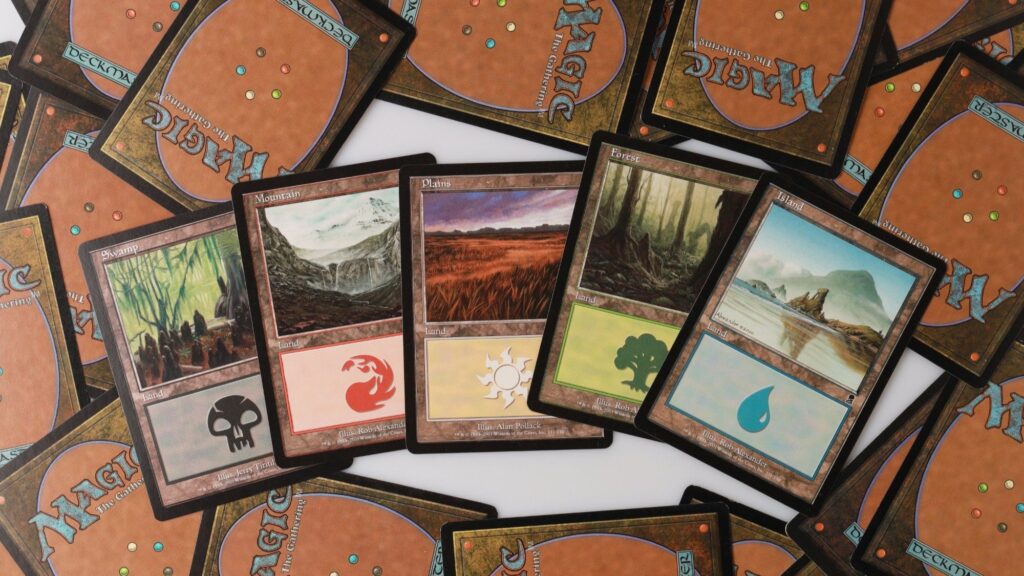
If you’ve ever stared at your opening hand and thought, “cool, i can cast exactly none of these spells,” you already understand why Basic lands in Commander matter. They’re not flashy. They don’t have cute bonus text. But they do the one job your deck absolutely needs: they let you play Magic on time. And when you start upgrading a mana base, basics are usually where the smartest upgrades begin, not where they end.
This article is about Basic lands in Commander, how many you should run, how to split them, and the exact order i’d upgrade a mana base if i wanted it to feel better fast without accidentally turning the deck into “tapland tribal.”
Basic lands in Commander: why they’re still the default
Basic lands do a few things better than most “budget duals” ever will:
They enter untapped.
That sounds obvious until you look at a lot of precons and realize half the mana base is politely asking you to play a turn behind. One untapped land doesn’t feel like a big deal. Three untapped lands over the first four turns feels like your deck got an engine upgrade.
They are searchable.
A ton of the best Commander ramp finds basics: Cultivate, Kodama’s Reach, Rampant Growth, Nature’s Lore (sometimes), and a bunch more. If you cut basics too aggressively, those spells get worse. Sometimes they get embarrassing.
They dodge a lot of punishment.
Your playgroup might not run Blood Moon every week, but it only takes one “oops, all nonbasics” game to start respecting it. Basics also help against stuff like Back to Basics and Ruination effects.
They keep your deck simple.
This is underrated. When your land base is stable, you can focus on sequencing spells instead of doing Sudoku to figure out whether you can cast your commander and hold up interaction.
And yes, basics do what they do because of their land types. In rules terms, a land with a basic land type has the intrinsic ability to tap for the matching color. That’s why “Forest” means green mana, even if the card text box is basically blank.
Commander deck rules that matter for basics
Two Commander rules are the whole reason basics feel “special” in deckbuilding:
- Commander is singleton, except for basic lands. So you can run as many Plains as you want, but only one copy of most nonbasic lands.
- Your lands still have to fit your commander’s color identity. In practice, that means you don’t get to run off-color basic land types “just because.” If your commander isn’t blue, Islands aren’t happening.
So when we talk about Basic lands in Commander, we’re really talking about the basics your deck is allowed to play, and how to use them as the foundation for everything else.
How many basic lands should you run in Commander?
There isn’t one magic number, but there is a pattern that holds up:
- Fewer colors usually means more basics.
- More colors usually means fewer basics, but you still want enough to support your ramp package and not fold to nonbasic hate.
- The more your deck relies on “search for a basic” ramp, the more basics you want available to fetch.
Here’s a clean starting point i use (not a law, just a good baseline):
| Deck colors | Typical total lands | Basic lands to start with | Why this works |
|---|---|---|---|
| 1 color | 36 to 40 | 24 to 32 | You don’t need fixing, basics are basically perfect |
| 2 colors | 36 to 38 | 16 to 24 | You can fix with a few duals, but basics stay strong |
| 3 colors | 36 to 38 | 10 to 16 | You need more fixing, but you still want fetchable basics |
| 4 colors | 36 to 38 | 6 to 12 | Basics become a “stability package” more than a main plan |
| 5 colors | 36 to 39 | 4 to 10 | Enough basics to fetch and survive hate, not so many you stumble |
A big note: total land count matters as much as basic count. A lot of decks “feel like the mana is bad” when the real issue is they’re trying to function on 33 lands and vibes. If you’re not sure where to start, the quick sanity check is: many Commander builds begin around 36 to 38 lands, then adjust based on curve and ramp.
How to split your basics by color (without doing math homework)
This is where people overcomplicate things. You don’t need a spreadsheet. You just need to respect your early turns.
Start with three questions:
1) What colors do i need early?
Look at your 1 to 3 mana spells. If your deck has a bunch of double-pipped cards early (like WW, UU, BB), you need more sources of that color. Period.
2) What color is my ramp?
Green decks that cast Rampant Growth into Cultivate want enough Forests to reliably start the chain. If your deck’s green spells are the ones that fix everything, treat green as the “starter motor.”
3) What color is my commander, and when do i want to cast it?
If your commander is a key engine and you want it down on curve, build your basics so that casting it is normal, not a special occasion.
A fast method that works surprisingly well:
- Pick a “main color” (the one you need earliest or most often). Start it 2 to 4 basics ahead.
- Split the rest evenly.
- After a few games, adjust 1 to 2 basics at a time based on what actually went wrong.
Example for a 3-color deck with 14 basics:
- Main color: 6
- Other two: 4 and 4
If you keep getting stuck with spells you can’t cast, don’t immediately buy a land cycle. First, check if your basics are just split wrong.
When basic lands are secretly better than “upgrades”
This is the part people don’t want to hear because it’s not exciting.
Sometimes the correct “upgrade” is cutting bad nonbasics and adding more basics.
If your deck is running a pile of lands that:
- always enter tapped,
- only make one color,
- and don’t do anything else,
then swapping those for basics often makes the deck faster immediately.
Also, basics make your deck sturdier against the classic “nonbasic hate” suite. You might never see it in your pod until you do. And when you do, it’s brutal if your mana base is all nonbasics.
Basics also play nicer with a lot of common ramp. If you cast Cultivate and realize you have two basics left in your deck on turn seven, that’s a deckbuilding problem, not bad luck.
Where to upgrade first: a simple Commander mana base order
Now the “where to upgrade first” part. If you want your deck to feel better fast, this is the order i recommend.
1) Fix the land count before you buy fancy lands
If you’re short on lands, you’re going to have games where you just don’t participate. That’s not “variance,” that’s self-inflicted.
Most decks that feel clunky get noticeably smoother by going up 1 to 3 lands, especially if you’re playing a midrange pile with a lot of 4 and 5 drops.
2) Replace your worst taplands first
Take the lands that enter tapped and provide little or no upside, and cut them. Replace them with basics if you’re on a budget, or with better untapped options if you’re ready to spend.
This is the quickest power-to-price upgrade you can make because it improves your first four turns, which is where Commander games are quietly decided.
3) Add a small set of “always good” fixing lands
Before you chase premium stuff, pick up the lands that almost never feel bad:
- Command Tower (in multicolor)
- Exotic Orchard (often solid in pods)
- Path of Ancestry (if your deck is tribal or commander-focused)
- The better “two-color lands that often enter untapped” cycles that fit your budget
You don’t need ten of these. You need enough that your opening hand stops being a coin flip.
4) Upgrade your ramp to match your mana base
This sounds like it’s not about lands, but it is.
If your ramp package is mostly mana rocks that don’t fix colors well, your three-color deck will still stumble. If your ramp package is land ramp, your deck needs enough basics (and/or fetchable land types) to support it.
If you want a bigger framework for this, Kraken Opus has a solid breakdown of ramp counts and how to tune them by curve: MTG Commander Ramp: How Much Ramp Is Right for Your Deck?
5) Then you start buying “real” upgrades: typed duals, fetches, and utility lands
This is where people usually start, and it’s why they waste money.
Premium lands are great. But they’re best when the foundation is already stable. Otherwise you buy one shock land, still play twelve taplands, and nothing feels different.
Budget upgrades that keep basics doing their job
If you’re trying to keep things reasonable, here are upgrades that typically play well with basics:
Cheap fetch-style basics finders
Terramorphic Expanse and Evolving Wilds are slower than true fetchlands, but they fix colors and they thin basics out of the deck a bit over time. They’re also nice if you care about landfall triggers.
Two-color lands that often enter untapped
Pain lands, check lands, and similar cycles are usually the “sweet spot” because they speed you up without needing a premium mana base.
A small utility land package
Utility lands are great until they start replacing the basics your deck needs to function. Pick a few that solve real problems (graveyards, card draw, flood insurance), and stop before your mana base turns into a novelty collection.
This is also where a deckbuilding checklist helps. It forces you to treat mana as a real category, not a vibe. If you want that structure, this is worth bookmarking: MTG Deckbuilding Checklist: The Simple Method That Fixes “Almost Good” Commander Decks
Advanced upgrades: when it’s worth cutting basics
Eventually you’ll reach the point where you ask: “Do i replace basics with better lands now?”
Sometimes yes. Here’s when it’s usually correct:
You’re 3+ colors and your early turns are color-stressed.
If you’re constantly missing one color early, more duals and tri-lands (the good ones) can matter more than raw basics.
You’re running land ramp that can fetch land types, not just basics.
Cards like Farseek and Nature’s Lore get better when your deck has lands with basic land types (like Forest duals). This lets you keep a “basic-like” ramp plan while improving fixing.
Your pod is fast enough that tapped lands are costing you games.
If you’re always the player who “gets going on turn five,” that’s usually a mana base and curve problem. Upgrading into more untapped lands helps.
But even in high-end mana bases, i still like keeping a real basics package. Why?
- You want targets for “search for a basic” effects.
- You want to survive the occasional nonbasic hate blowout.
- You want your deck to be consistent, not just theoretically perfect.
So yes, upgrade. Just don’t cut basics like they’re embarrassing.
Common mistakes people make with basic lands in Commander
Mistake 1: Cutting basics before cutting bad lands
If your deck is slow, basics are not the first suspect. Taplands with no upside are.
Mistake 2: Running too many utility lands
Utility lands are “free value” until they start color-screwing you. If you’re missing colors, trim utility lands before you trim basics further.
Mistake 3: Splitting basics evenly when your deck isn’t
Your spell pips aren’t evenly split, so your basics shouldn’t be either. If one color is doing the early work, feed it.
Mistake 4: Treating ramp as a substitute for lands
Ramp helps you get ahead. It doesn’t fix missing land drops. If you keep hands with two lands and “some ramp,” you’re signing up for games where one removal spell sets you back to the stone age.
Final thoughts
Basic lands in Commander are still the most underrated “card” in your deck because they make everything else work. If you’re upgrading a mana base, start boring: land count, taplands, and basic splits. Then upgrade into better fixing. Then chase the premium stuff.
Do it in that order and you’ll feel the difference quickly. And you’ll stop having those games where your deck is technically fine, you just didn’t get to cast spells until everyone else was already doing crimes.